How to Stop Someone From Snoring: Tonight and Long Term

Quick answer, if you’re in a hurry: roll them onto their side, prop their head up a little, and clear out any nasal congestion that’ll usually buy you some peace tonight. But if you actually want the snoring gone for good, you’re looking at a combination of things: sleeping on the side consistently, keeping weight in check, cutting back on alcohol before bed, and doing a few airway strengthening exercises every day.
If you harry click here…….
It’s 2 a.m. The house is dead quiet except for that rumbling sound coming from right next to you. You nudge them. You sigh loudly, hoping the vibration alone will wake them up. Nothing works. You end up staring at the ceiling wondering how a person who’s completely unconscious can produce that much noise
If this sounds familiar, you’re in good company. Roughly 90 million Americans snore at some point, and about 37 million do it regularly numbers that come from data the American Medical Association has cited. Among couples, it’s one of the most common things that quietly wears people down, night after night.
Here’s the reassuring part: snoring almost never has to be permanent. You have more control over it than it probably feels like right now. This guide covers what actually causes snoring, what to do about it tonight, and which habits and exercises make it fade away for good plus the signs that mean it’s time to stop DIY-ing it and see a doctor.
Let’s get you both back to actually sleeping.
Why People Snore: The Simple Science Behind the Sound
Snoring is really just air struggling to move freely through your nose, mouth, and throat while you sleep. When your throat muscles relax at night, the soft tissue back there starts vibrating against itself as air passes through and that vibration is the sound you’re hearing.
“Snoring in and of itself is caused by vibration of the tissues in the back of the throat,” says Virginia Skiba, MD, a sleep medicine physician at Henry Ford Health, in an interview with the AMA. “When the air goes in, the tissues vibrate and that’s what produces the snoring noise.”
A few things tend to make that vibration worse:
- Weak or overly relaxed throat and tongue muscles that sag into the airway
- Extra tissue at the back of the throat
- A narrower-than-usual airway, whether from congestion, anatomy, or how someone’s sleeping
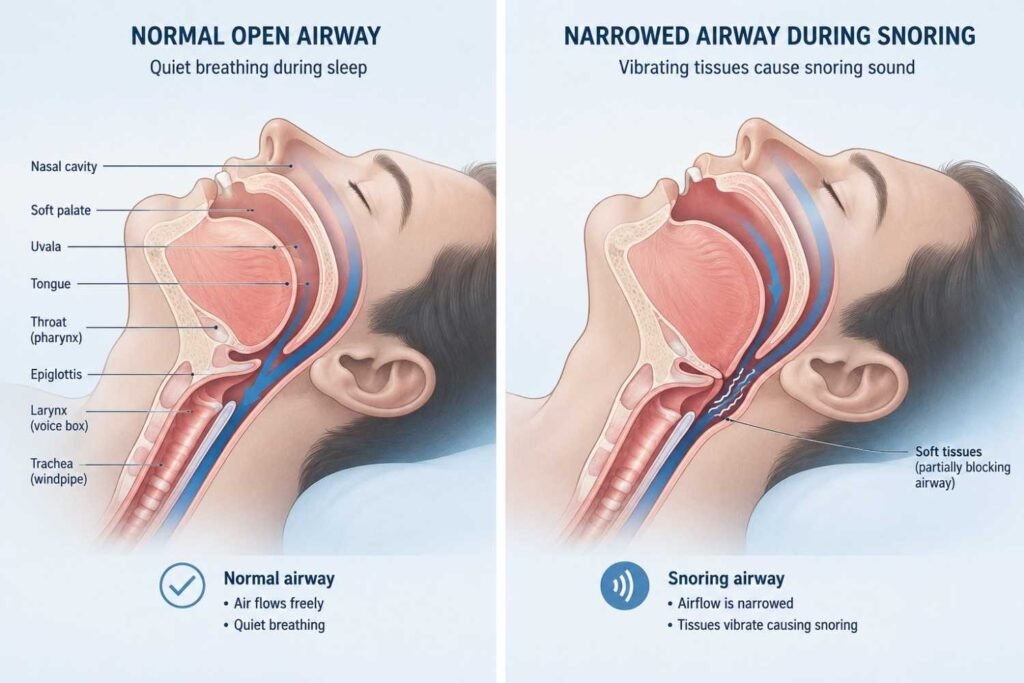
According to SleepApnea.org, up to 44% of adults aged 30 to 60 snore on a regular basis. So if this has crept into your bedroom over the last few years, you’re not imagining it . it’s just biology doing its thing.
If it’s happening right now and all you want is some sleep, here are the fixes that actually work in the moment no special equipment needed.
- Roll them onto their side. This single move is probably the most effective quick fix there is. A gentle nudge usually does it.
- Raise the head of the bed. Lifting it about 4 inches can open up the airway, according to the Mayo Clinic. A wedge pillow that lifts the whole upper body (not just the neck) tends to work better than a regular pillow stack.
- Clear the nose. A saline rinse or an over-the-counter decongestant can knock out stuffiness fast.
- Offer a glass of water. Dry airways vibrate more, so a sip before bed genuinely helps.
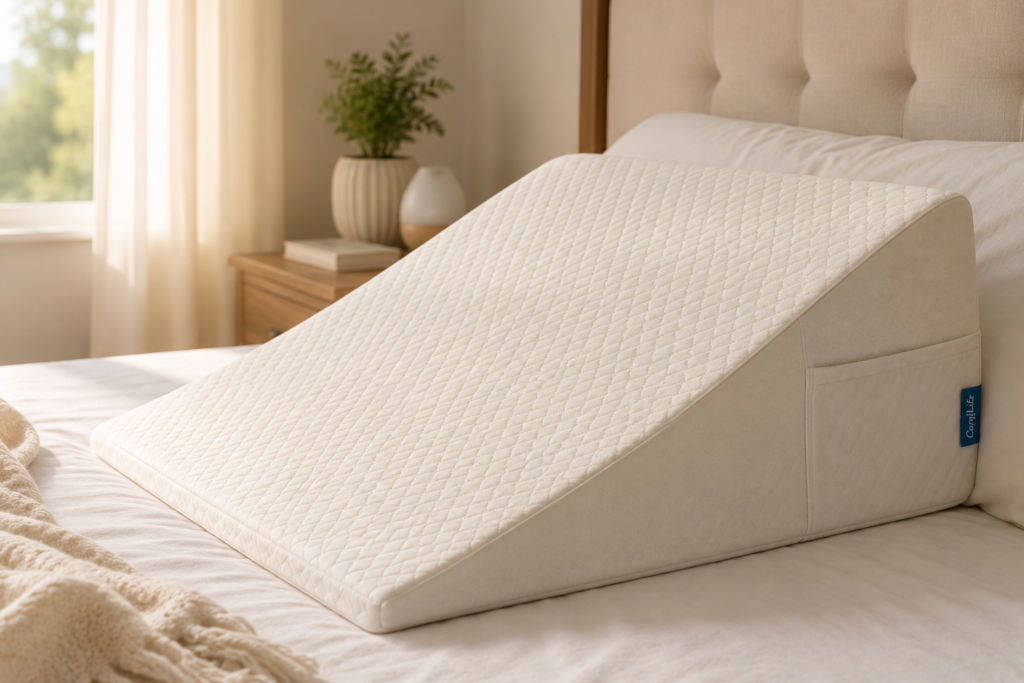
And if you’re the one stuck awake beside the noise, a white noise machine, a fan, or a pair of earplugs can mask the sound while the other fixes start working. These aren’t real solutions long-term, but on a rough night, they’ll save you.
Check Out This Easy Nighttime Routine……
How to Immediately Stop Snoring in the Moment
Sometimes you just need something that works right now, not in three weeks. A few simple tools can genuinely change how tonight goes.
Nasal strips. These stick across the bridge of the nose and gently pull the nasal passages open. The Mayo Clinic notes they help many people widen their nasal passage and breathe more easily.
Nasal dilators. Small devices that sit inside the nostrils and cut down airflow resistance useful when congestion is the main issue.
Position training. The old tennis-ball trick still works surprisingly well: sew one into the back of a pajama shirt. Roll onto your back, and the discomfort nudges you right back onto your side.
Skip the nightcap. Avoid alcohol for at least a couple of hours before bed. It’s one of the fastest, most reliable ways to quiet things down, since alcohol loosens the throat muscles exactly when you need them to stay firm.
These aren’t gimmicks they work because they act directly on the airway, and most people notice a difference the very first night. Just one caution: if the snoring is loud and constant, masking it with tools without getting checked out could mean you’re covering up something bigger (more on that further down).
Best Sleeping Position to Stop Snoring
If you only change one habit, make it this one. Side sleeping either side is the position that actually keeps the airway open.
Here’s the mechanism: lying on your back lets the tongue fall backward into the throat, partially blocking airflow. Turn onto your side and that blockage mostly disappears. It costs nothing and it works.
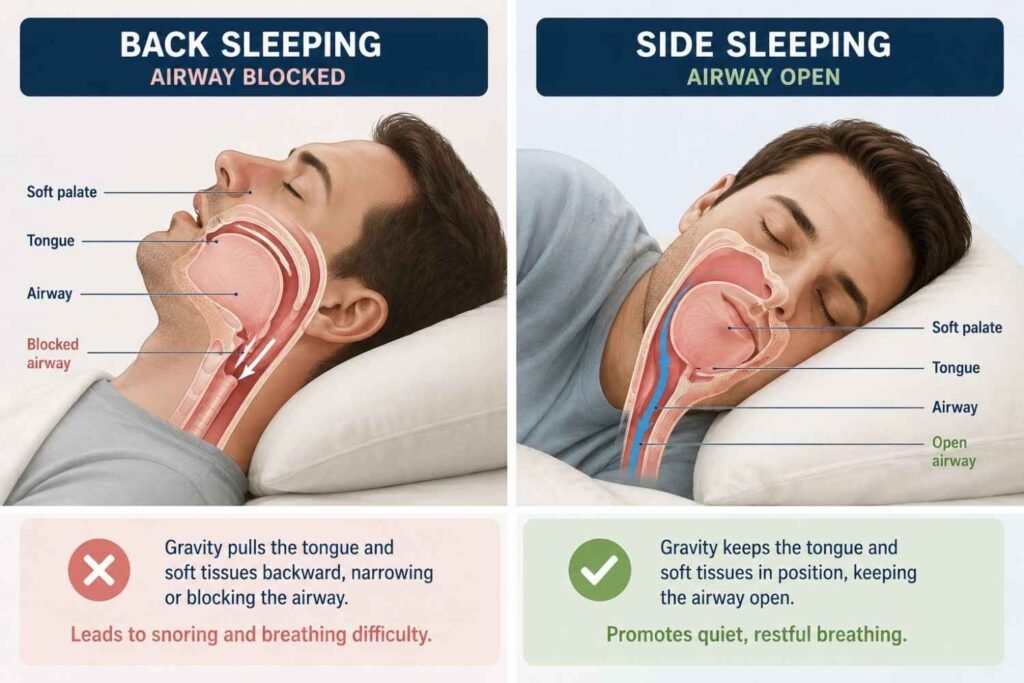
A few tricks to actually make side sleeping stick:
- Wedge a body pillow behind you so you can’t roll back.
- Try the tennis-ball trick mentioned earlier.
- Add a wedge pillow to elevate your upper body if side sleeping alone isn’t quite enough.
It usually takes a few nights of adjusting before it feels natural, but of everything in this guide, this is probably the most reliable, zero-cost habit you can build.
Breathing Exercises for Snoring That Actually Work
This is where the real long-term change happens. The right breathing exercises retrain your body to breathe through the nose and keep the airway open while you sleep.
Since mouth breathing and snoring are so tightly linked, learning to breathe through your nose again is one of the most effective things you can do naturally. Two worth trying:
Alternate nostril breathing
- Close your lips.
- Press your right nostril shut with a finger.
- Breathe in through your left nostril.
- Switch close the left, breathe out through the right.
- Repeat five times per side.
Balloon breathing
- Put the open end of a deflated balloon in your mouth.
- Breathe in through your nose.
- Breathe out hard enough through your mouth to inflate the balloon.
- Repeat five times.
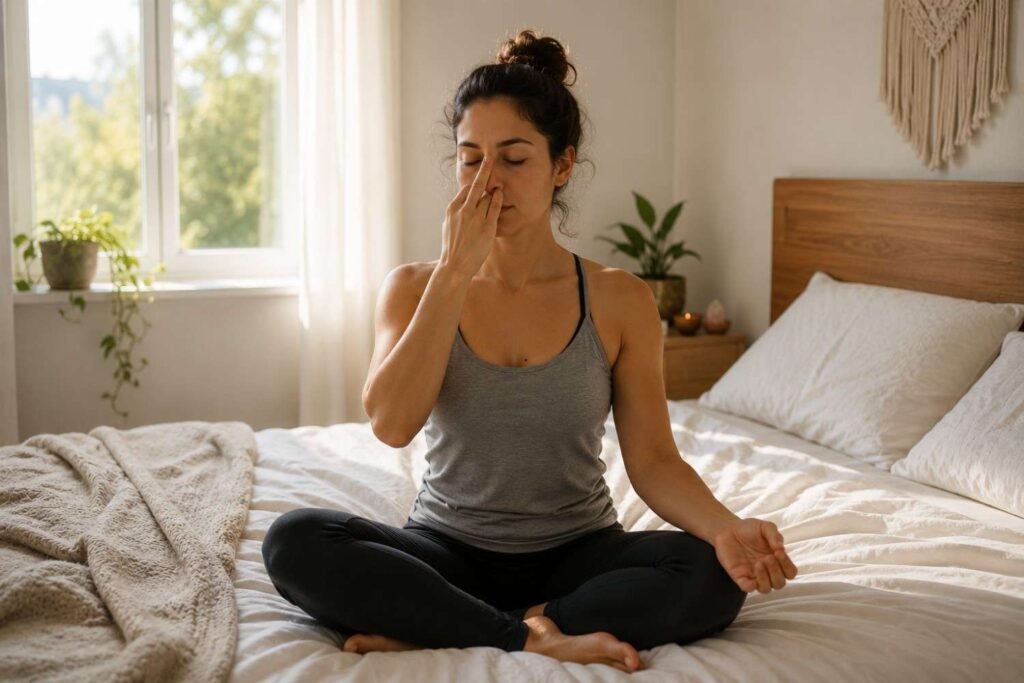
These strengthen the muscles around your airway while training you back toward nasal breathing. Do them consistently and the difference over a few weeks is genuinely noticeable. Guided breathing apps can help if you tend to forget.
Natural Remedies for Snoring: What Really Helps
There’s no shortage of gadgets promising a silent night, but the remedies doctors actually recommend first are habits, not products.
- Sleep on your side the foundational fix, already covered above.
- Manage your weight even a modest drop can reduce the tissue crowding your airway.
- Cut back on evening alcohol a small change with a consistent, proven payoff.
- Treat nasal congestion saline sprays, allergy management, or a humidifier to keep things moist.
- Quit smoking the Mayo Clinic notes this alone can reduce snoring, on top of everything else it improves.
- Get enough sleep aim for at least seven hours. Overtired muscles relax more deeply, which only makes snoring worse.
What makes these approaches worth the effort is that they’re free, they last, and they improve your overall health along the way not just your partner’s sleep. If you’ve already spent money on gadgets that promised the world and delivered nothing, this is the more honest starting point.
Just set realistic expectations here too these habits stack on top of each other over time. There’s no single overnight fix, but what you build lasts.
Breathing Exercises for Snoring That Actually Work
This is where the real long-term change happens. The right breathing exercises retrain your body to breathe through the nose and keep the airway open while you sleep.
Since mouth breathing and snoring are so tightly linked, learning to breathe through your nose again is one of the most effective things you can do naturally. Two worth trying:
Alternate nostril breathing
- Close your lips.
- Press your right nostril shut with a finger.
- Breathe in through your left nostril.
- Switch close the left, breathe out through the right.
- Repeat five times per side.
Balloon breathing
- Put the open end of a deflated balloon in your mouth.
- Breathe in through your nose.
- Breathe out hard enough through your mouth to inflate the balloon.
- Repeat five times.
These strengthen the muscles around your airway while training you back toward nasal breathing. Do them consistently and the difference over a few weeks is genuinely noticeable. Guided breathing apps can help if you tend to forget.
Natural Remedies for Snoring: What Really Helps
There’s no shortage of gadgets promising a silent night, but the remedies doctors actually recommend first are habits, not products.
- Sleep on your side the foundational fix, already covered above.
- Manage your weight even a modest drop can reduce the tissue crowding your airway.
- Cut back on evening alcohol a small change with a consistent, proven payoff.
- Treat nasal congestion saline sprays, allergy management, or a humidifier to keep things moist.
- Quit smoking the Mayo Clinic notes this alone can reduce snoring, on top of everything else it improves.
- Get enough sleep aim for at least seven hours. Overtired muscles relax more deeply, which only makes snoring worse.
What makes these approaches worth the effort is that they’re free, they last, and they improve your overall health along the way not just your partner’s sleep. If you’ve already spent money on gadgets that promised the world and delivered nothing, this is the more honest starting point.
Just set realistic expectations here too these habits stack on top of each other over time. There’s no single overnight fix, but what you build lasts.
Anti-Snoring Exercises That Work: Your Daily Routine
This is the part most people have genuinely never heard of, and it’s backed by real research. Mouth, tongue, and throat exercises collectively called myofunctional therapy tone the exact muscles that keep your airway from collapsing.
The evidence is honestly pretty compelling. A 2015 study by Ieto and colleagues, published in the journal Chest, found these exercises cut snoring volume by 60%. A separate meta-analysis published in Sleep that same year found similar exercise therapy reduced sleep apnea severity by about 50%. And a 2009 study out of Brazil, led by Guimaraes and colleagues, found participants doing daily exercises lowered their sleep apnea severity by 39%, while a control group saw no change at all.
Learn the At-Home Method Reviewed Here…..

Five exercises drawn straight from that research:
- Tongue slide Place the tip of your tongue on the roof of your mouth and slide it backward. About three minutes a day.
- Tongue push-up Press your tongue flat against the roof of your mouth and suck it upward. Hold two seconds, repeat 20 times.
- Tongue press-down Push the back of your tongue against the floor of your mouth, tip resting behind your lower front teeth.
- Cheek hook Hook a finger inside your cheek and pull outward while your cheek muscles resist and pull back in. Do both sides.
- The “aahh” lift Say “aahh” and focus on lifting the soft tissue at the back of your throat. With practice, you’ll be able to lift it silently.
The good news: you don’t need to block off half an hour for this. Research suggests as little as eight minutes a day roughly 40 minutes a week done consistently for about three months can make a real difference. Think of it as yoga for your mouth. It fixes the actual cause instead of just muffling the symptom.
How to Stop Snoring Without Surgery
If the word “surgery” makes you wince a little, here’s some relief most people never need it. Almost everything covered in this guide is completely non-surgical.
Your non-surgical toolkit, all in one place:
- Side sleeping and head elevation
- Breathing exercises and daily myofunctional routines
- Nasal strips or dilators for congestion-driven snoring
- Weight management and cutting back on evening alcohol
- Oral appliances, fitted by a dentist, that gently shift the jaw forward to open the airway
Doctors almost always recommend trying lifestyle changes first, and for good reason most cases respond well to them. Surgery tends to be reserved for more severe situations where excess tissue or a clear structural issue is the actual root cause. Starting with the non-surgical route makes sense for nearly everyone: it’s cheaper, lower-risk, and often works just as well.
When Snoring May Signal a More Serious Problem
Before writing snoring off as just an annoyance, it’s worth knowing when it’s actually a warning sign. About half of people who snore loudly have obstructive sleep apnea a condition where breathing repeatedly stops and starts throughout the night.
“It’s when you have sleep apnea that it’s going to increase the risk of health complications such as heart disease,” Dr. Skiba warns. Left untreated, sleep apnea has been linked to high blood pressure, stroke, type 2 diabetes, and cognitive decline over time.

Talk to a doctor if you or your partner notice any of the following:
- Gasping or choking awake during the night
- Breathing pauses your partner has actually witnessed
- Feeling exhausted during the day despite a full night in bed
- Waking up with headaches
- High blood pressure
- Loud, near-nightly snoring
“A sleep study would be the only way to figure out if it’s just primary snoring or if it is sleep apnea,” Dr. Skiba explains. A lot of sleep studies can now be done from home with a small monitor, so it’s less of a hassle than it used to be. Knowing how to reduce snoring is genuinely useful but if these warning signs show up, getting a proper diagnosis comes first.
Frequently Asked Questions
How do you stop someone from snoring immediately? Roll them onto their side, prop their head up, and clear any nasal congestion. Nasal strips and skipping alcohol before bed help too. These work directly on the airway, so you’ll often notice quieter sleep that same night.
Can you stop snoring naturally without devices? Yes. Side sleeping, managing weight, cutting evening alcohol, treating congestion, and doing daily throat exercises are the most reliable natural approaches — all free, and all improve with time.
Do anti-snoring exercises really work? The research backs it up. A 2015 study in Chest found mouth and throat exercises reduced snoring volume by 60%, and a separate meta-analysis found similar exercises cut sleep apnea severity by 50%. Consistency over about three months is the key.
How long does it take to stop snoring with exercises? Most studies show real results after roughly three months of daily practice, even in sessions as short as eight minutes. Position changes and nasal strips, on the other hand, can help from the very first night.
Is snoring always a sign of sleep apnea? No. A lot of people have what’s called “primary snoring,” which carries no real health risk. But since about half of loud snorers do have sleep apnea, it’s worth getting checked if you notice gasping, breathing pauses, or daytime exhaustion.
When should I see a doctor about snoring? See a doctor if the snoring is loud and frequent, or if you notice signs of sleep apnea like choking awake, witnessed breathing pauses, morning headaches, or daytime sleepiness. A sleep study can confirm whether it’s harmless or something that needs treatment.
Ready to Sleep in Peace Again?
Snoring can feel like a permanent fixture, but it almost never has to be. Between the quick fixes that quiet things down tonight and the exercises and habits that work over the following months, you’ve now got a full toolkit for dealing with it gently, naturally, and for good.
Start tonight with the easy stuff: side sleeping, a slightly raised head, a clear nose. Then build from there daily airway exercises, less alcohol in the evening, and consistent, decent sleep. Most people never need surgery to get there.

And if any of those sleep apnea warning signs sound familiar, don’t put off that doctor’s visit. Quiet nights matter, but this is really about protecting your health for the years ahead.
Explore This Sleep Routine………